
Mia Krüger · 10 October 2026
Examining Real-Time Sync Protocols in Note Platforms for Distributed Research Teams
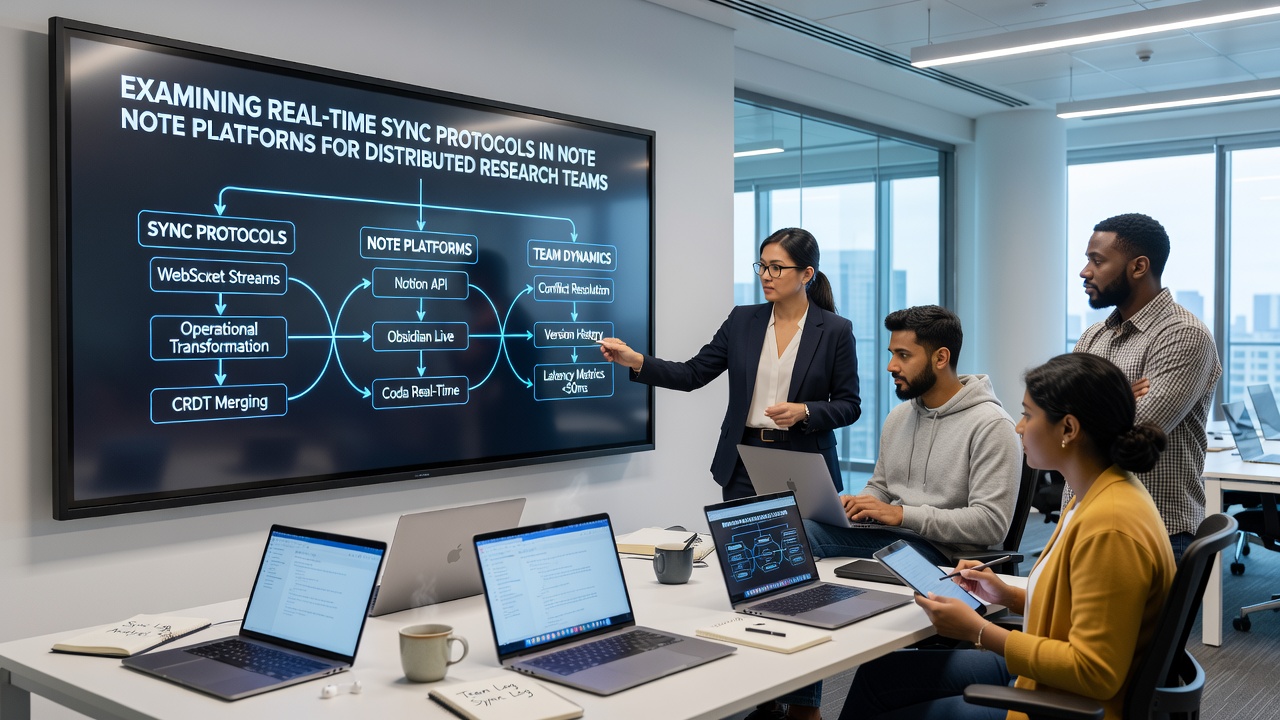
Real-time synchronization protocols form the backbone of note platforms that support distributed research teams, and they enable multiple users across different locations to edit shared documents without conflicts while maintaining data consistency. These systems rely on established techniques such as operational transformation and conflict-free replicated data types to handle concurrent changes, and they address challenges like network latency, offline editing, and eventual consistency that arise when teams span continents. Observers note that platforms designed for academic and scientific collaboration have adopted these protocols at increasing rates since the expansion of remote work models in the mid-2020s.
Core Mechanisms Behind Synchronization
Operational transformation works by adjusting incoming edits to account for changes already applied at other nodes, and it maintains a total order of operations through a central server or sequenced log that all clients reference. In contrast, conflict-free replicated data types allow independent updates at each replica with automatic merging rules that guarantee convergence once all messages propagate. Researchers have documented how CRDT implementations reduce server load in large teams because they shift reconciliation logic to the client side, and they support seamless offline work followed by automatic catch-up when connectivity returns. Data from industry reports indicates that hybrid approaches combining both methods appear in several widely used note platforms as of October 2026.
Performance in Distributed Environments
Latency measurements from academic benchmarks reveal that CRDT-based systems often achieve sub-second convergence for text edits even when participants connect from regions with varying bandwidth, whereas operational transformation can introduce brief pauses during high-contention periods. One study conducted at a European research institution tracked synchronization delays across five continents and found median resolution times under 300 milliseconds for typical research-note updates. Those who've examined production logs observe that platforms incorporating vector clocks or version vectors alongside these protocols gain additional visibility into edit causality, which proves useful when research teams need to audit contribution histories or resolve disputes over data provenance.
Platform Implementations and Adoption Patterns
Several note platforms serving research communities integrate these protocols differently, and they tailor features to the needs of collaborative literature reviews, experimental logging, and manuscript drafting. Some rely on WebSocket channels for push-based updates while others layer synchronization atop HTTP long-polling for broader compatibility. Evidence suggests that teams working on multi-author papers benefit when platforms expose merge previews that highlight CRDT-resolved conflicts, and they allow manual overrides when automated rules produce unexpected groupings of text blocks. Figures from technology adoption surveys show steady growth in CRDT usage among tools aimed at university consortia and international labs between 2023 and 2026.
Take the case of a distributed biology lab that coordinates field data entry from remote sites; their chosen platform uses CRDTs to merge sensor readings and annotation notes without requiring constant connectivity. The system records each insertion with metadata tags that enable later filtering by contributor or timestamp, and it preserves formatting integrity across simultaneous edits from team members in different time zones. Observers note that such capabilities reduce the frequency of version-branching incidents that once disrupted research timelines.
Security and Compliance Considerations
Encryption of sync traffic occurs both in transit and at rest on most platforms, yet the choice of protocol influences how keys rotate during long-running sessions. Research indicates that CRDT payloads can carry additional authentication tokens without significant overhead, and they allow fine-grained access controls that restrict visibility of sensitive sections within a shared notebook. Government guidelines from agencies in Canada and Australia emphasize audit logging of synchronization events for projects involving regulated data, and they recommend platforms that expose detailed operation histories. Those responsible for compliance often verify that the underlying protocol supports selective disclosure so that external reviewers see only approved portions of collaborative notes.
Future Directions and Emerging Standards
Work on standardized CRDT libraries continues through academic and industry collaborations, and it aims to simplify integration for smaller development teams building specialized research tools. New proposals explore integrating differential synchronization techniques that transmit only changed regions rather than full document states, and they promise lower bandwidth consumption for teams handling large multimedia annotations. As of October 2026, several open-source projects demonstrate these optimizations in test deployments with research groups, and they report measurable reductions in mobile data usage during extended field campaigns. The ball remains in the court of platform maintainers to adopt these refinements while preserving backward compatibility for existing distributed teams.
Conclusion
Real-time sync protocols continue to evolve in response to the demands of distributed research, and they provide the technical foundation that allows note platforms to deliver reliable collaboration across geographic and organizational boundaries. Continued measurement of convergence times, conflict rates, and security properties will guide refinements, while adoption data from October 2026 onward will indicate which approaches gain traction among academic and scientific communities. Those who maintain these systems focus on balancing performance, consistency guarantees, and compliance requirements so that research teams can concentrate on their primary work rather than synchronization mechanics.